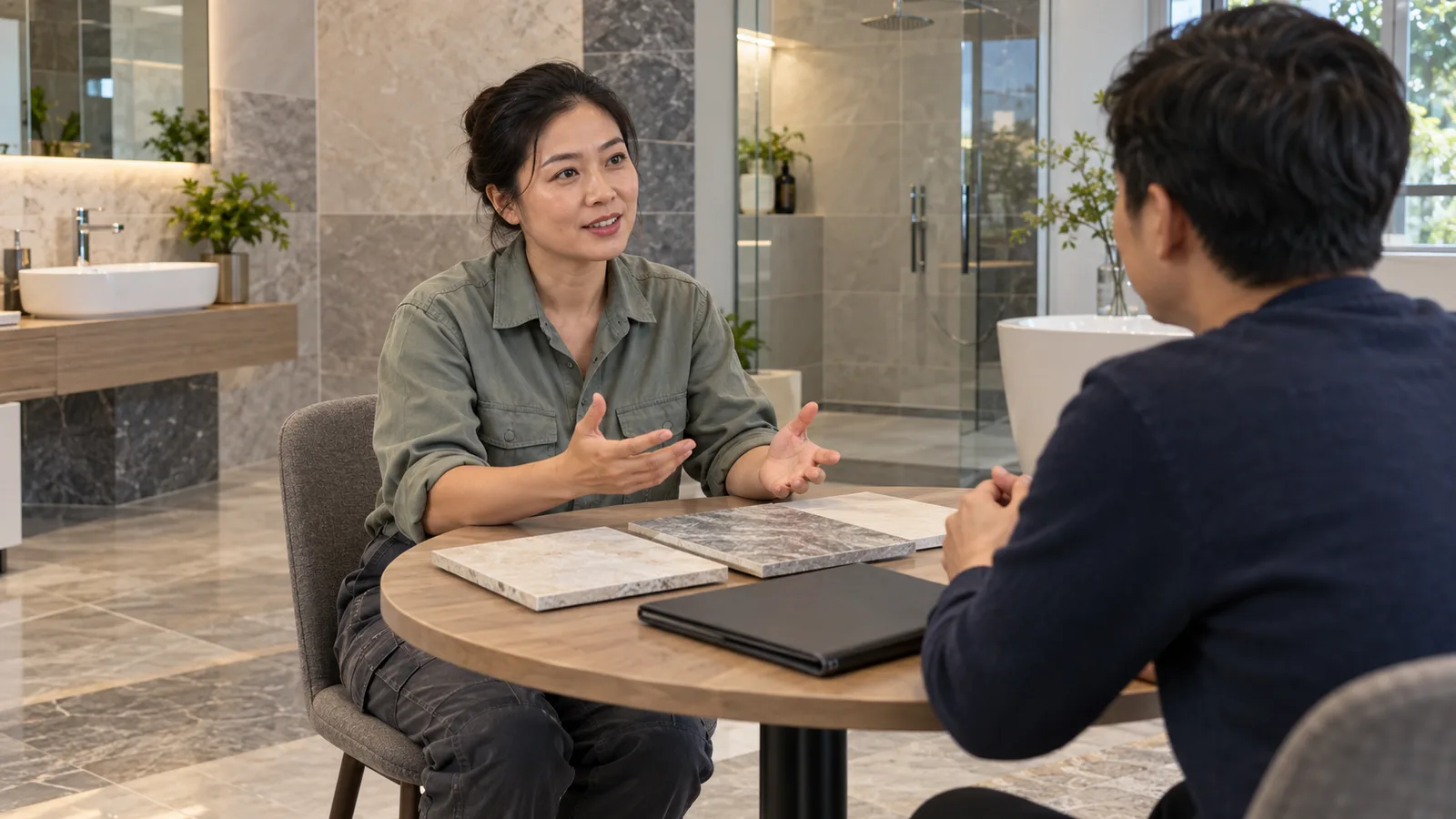
The best answer to "What is your biggest weakness?" in a trade interview names one real weakness that does not put safety or reliability at risk, gives one short example, and ends with what you are already doing about it. Keep it to about four sentences. Choose a gap in a skill, not a problem with your character: a machine you have used less, a software system, or quoting the time a job will take.
Why the interviewer asks about your weakness
This question is on almost every list. The Australian Government's job interview advice puts "What are your weaknesses?" among its common questions, next to "Can you tell me about yourself?" and "Where do you see yourself in 5 years?". New Zealand's Tahatū careers site asks it together with strengths.
The interviewer is not trying to trick you. In a trade job they want to know three things.
- Do you know your own work? A tradesperson who can see their weak spot can be trained.
- Is the weakness a danger in this job? A slow typist can still be a very good welder. A welder who skips the fire check cannot.
- Will you fix it? They want to hear a plan, not an excuse.
The Australian Government's advice says it in plain words: tell the employer about a real weakness that is relevant to the job, and how you are trying to improve it. Tahatū's interview tips put the weight on the second half, on how you overcome your weaknesses.
Safe weaknesses and risky weaknesses for a trade job
Sort your possible answers before the interview. Some weaknesses are safe to say. Others make the employer worry about the whole job.
| Weakness | Safe to name? | Why |
|---|---|---|
| Less experience with one process, machine or brand (TIG on aluminium, a new scan tool) | Yes | It is a skill gap. Training and practice fix it. |
| Software, apps and digital job sheets | Yes | You can learn it quickly, and you can show progress. |
| Estimating how long a job will take | Yes, with a clear fix | It shows you care about the customer's time and the boss's quote. |
| Speaking up in a group, such as a toolbox talk (a short safety meeting before work starts) | Yes | Common for people new to a country. Easy to improve. |
| Skipping safety steps when you are in a hurry | Never | Safety is the first thing employers and assessors check. |
| Being late or missing days | Never | Turning up is part of the job. |
| Losing your temper with customers or the team | Never | You work with people every day. |
Weaknesses never to name, and why
Anything about safety
Safety comes first in trade interviews. VETASSESS, which runs technical interviews for skills assessments in Australia, lists workplace health and safety first among its interview areas for trades such as motor mechanic, carpenter and bricklayer: correct manual handling, spotting hazards and wearing the right PPE (personal protective equipment).
In Australia, workers must take reasonable care for their own health and safety and for others who may be affected by what they do. This is a duty under the model work health and safety laws. So "Sometimes I forget my safety glasses" is not a small weakness. You are telling the employer that you miss a legal duty.
Anything about reliability
Being late, leaving early, missing days or losing tools all fall here. An employer who trains you, or brings you from overseas, needs to know you will be there on Monday morning.
The main skill of the job
Your weakness should be relevant to the job, but it cannot be the job itself. A tiler who says "I find it hard to get tiles level" has named the one thing the employer is paying for. Pick a side skill instead, such as quoting or paperwork.
A three-part answer, then stop
Use the same order every time. It keeps you short when you are nervous.
- Name the weakness in one sentence. Use plain words: "One thing I am still building is..."
- Give one short example. Show when it matters at work: "On my last job, this meant..." One example is enough.
- Say what you are doing about it now. Name a real action you have already started.
- Stop talking. Do not add a second weakness. Let the interviewer ask the next question.
The "what I am doing about it" ending
The ending turns a weakness into a plan. It must be true, because a good interviewer will ask a follow-up question: "Which course?" or "Who showed you?"
VETASSESS gives skills-assessment candidates a useful list of ways to improve in an area: read about it in books or online, ask questions of experts, complete a training course, ask others to show you how to do the task, and practise practical tasks. Each one makes a good ending.
- "I am reading the manufacturer's guides for the new systems, one section each week."
- "I asked our senior tradesperson to show me, and I watch every time they do one."
Not started yet? Start before the interview, so your ending is honest.
Sample answers for five trades
These are examples only. Change the details to match your own work, and say them in your own words.
Motor mechanic
A simple answer could be: "My biggest weakness is hybrid vehicles. Most cars in my workshop at home run on petrol or diesel, so I have serviced only a few hybrids. I am working through the manufacturer's online training, and I ask our senior mechanic to let me watch when a hybrid comes in."
Carpenter
A simple answer could be: "I am not fast at estimating how long a job will take. Last year I told a customer a deck would take two days, and it took three. Now I write down my real hours on every job and compare them with my guess."
Welder
A simple answer could be: "I have less experience with TIG on aluminium. Most of my work is MIG on steel frames. I practise TIG on aluminium offcuts after work, and my supervisor checks the welds on Fridays."
Chef
A simple answer could be: "I find it hard to hand jobs to junior cooks. In a busy service I used to do the hard tasks myself, and that slowed the line. Now I give each junior one clear task before service and check it once. They learn faster."
Electrician
A simple answer could be: "My weakness is digital paperwork. In my last company we wrote job sheets by hand. I expect to use an app for job sheets and photos in my next job, so I have been practising with one on my phone and writing up every job the same day."
When the question comes in another form
Interviewers do not always use the word "weakness". Listen for these versions.
- "What are your strengths and weaknesses?" Give a short strength first, then the weakness. Our guide to the "what are your strengths?" answer for tradespeople helps you keep the first half short.
- "Have you ever failed at a task?" The UK's National Careers Service lists this among its common questions. It asks for a true story, so use STAR: the situation, the task, the action you took, and the result, plus what you learned.
- "Can you give me another weakness?" Have a second safe weakness ready, and keep it even shorter.
Employers who hire from overseas ask this question too. See the questions sponsor employers ask tradespeople for the rest of the set. For gaps in your CV, leaving a job and pay, read our guide to difficult interview questions and answers.
Prepare your weakness answer the night before
The Australian Government's advice is to re-read your resume, pick out what you want to show, and write down examples you can use in the interview. Do the same for your weakness: underline the main skills in the job ad, write down three true weaknesses, cross out any about safety, reliability or honesty, and keep the one with the best ending. The same advice says it can help to practise your answers with someone you trust.
Then check your CV. If your CV says "TIG welding: expert", do not tell the interviewer TIG is your weakness. Build AI CV can help you list your skills honestly, so your CV and your answer tell the same story. Optional: a verified Talent Tabloid profile lets employers check your experience and can help your application stand out.
Common mistakes
- Saying "I have no weaknesses". It sounds as if you have not prepared, or that you are hiding something.
- Using a fake weakness. "I am a perfectionist" is not real, and the interviewer knows it.
- Naming a safety weakness. Forgetting PPE or rushing a lock-out is never a safe answer, even with a fix.
- Telling a long story. Tahatū advises keeping answers brief and to the point.
- Forgetting the ending. A weakness with no plan sounds like a problem the employer has to fix for you.
- Inventing a plan. If you say you are doing a course, be ready to name it and say what you learned last week.
- Choosing English without thinking. If spoken English worries you, first read why imperfect English is OK in a trade interview. You may find a better weakness to name.
Practise saying it out loud
A weakness answer can look fine on paper and come out long and nervous. Say it out loud many times before the day.
On InterviewTraining.ai you watch an interviewer ask a question on video, answer out loud, and get a score from 0 to 10 with what you did well, what to add, and a stronger answer. The answer timer follows the English level you choose: 90 seconds for each answer at Foundation, 75 at Working and 60 at Fluent. The marking does not take marks off for your accent, small grammar mistakes or simple words.
Start with the personal questions in General Practice. Then try your weakness answer inside a full mock interview. How it works explains each step. How you look and sound while you talk about a weakness matters too; the Interview Presence section is coming soon.
Frequently asked questions
Is it OK to say I have no weaknesses?
No. It sounds as if you have not thought about the question, or that you are hiding something. Choose one real skill gap and show what you are doing about it.
Can I say my English is my biggest weakness?
It can work if it is true and specific, for example writing long reports or reading technical manuals. Avoid a general line like "my English is bad". Say which part is slower and what you do each week to improve it.
How long should my weakness answer be?
About four sentences, well under a minute. Name the weakness, give one example, say what you are doing about it, then stop. A short answer sounds calm and honest, and it leaves time for the questions that show your skills.
What if the interviewer asks more questions about my weakness?
Answer with the real details of your plan: the course, the person who is teaching you, or how often you practise. A follow-up question is a good sign: the interviewer is interested.
Key takeaways
- Name one real weakness that is relevant to the job but is not its main skill.
- Never name a weakness about safety, reliability or honesty.
- Use three parts: the weakness, one short example, and what you are doing about it now.
- Make the ending true, because the interviewer may ask about it.
- Keep it to about four sentences, then stop and practise it out loud.
Topics
- what is your biggest weakness
- weakness interview answer
- weakness examples for interview
- trade job interview
- common interview questions
- tradespeople