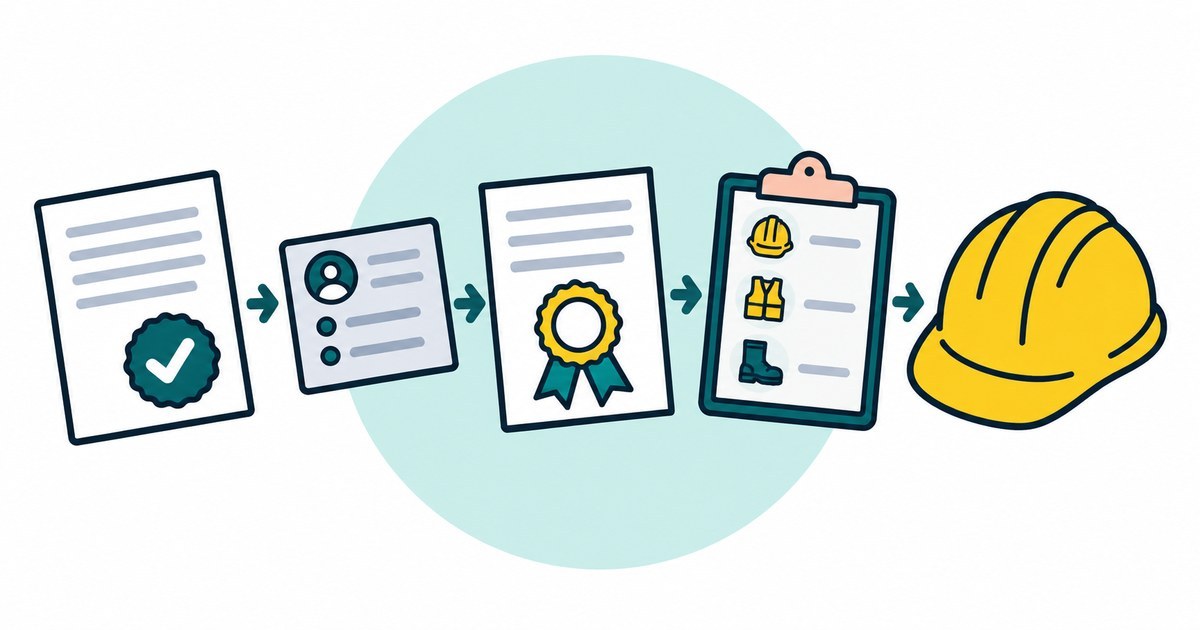
The interview went well. A few days later, the employer says they would like to offer you the job. It is a good moment, but the process is not finished yet.
Between the offer and your first day, employers usually check several things. They speak to your referees. They look at your qualifications. They confirm that you are allowed to work in the country. Then they send a written offer and plan your first day on site.
This guide explains each step in general terms, so nothing surprises you. Every employer and every country is different. For anything about visas, use the official government website only.
Why the checking starts after the interview
In the interview, the employer listened to what you said. Now they need to confirm it. This is normal for any new worker, local or from overseas. It does not mean they doubt you.
It matters even more when the employer has not met you in person. They may have seen you only on a video call.
The lesson for your interview is simple. Say only what your documents and your referees can support. If you say you have eight years of experience, your CV and your referees must show the same thing.
If your interview is still ahead of you, start with the questions sponsor employers ask tradespeople.
What employers usually check
| Check | What the employer wants to know | What you can prepare |
|---|---|---|
| References | Did you really do this work, and how well? | Names and current contact details of past supervisors who have agreed to speak |
| Work history | Do the jobs and dates match what you said? | An up-to-date CV with correct dates |
| Qualifications | Is your trade training real, and does it fit the job? | Clear copies of your certificates, with translations if they are not in English |
| Licences and registration | Are you allowed to do this type of work here? | A check of the official licensing website for your trade |
| Right to work | Are you legally allowed to work in the country? | Your passport and any documents the employer asks for |
Some employers ask for other checks too, such as a medical check or a police check. This depends on the employer and the job. If you are not sure what is needed, ask.
If a recruiter found you the job, ask them which checks the employer will do and in what order. It is a normal question for anyone who places people in jobs overseas.
References: choose people who will answer
A referee is a person who can tell the new employer about your work. The best referee is someone who supervised you directly, such as a workshop manager, a foreman or a site supervisor.
Before you give a name:
- Ask the person if they are happy to be your referee.
- Tell them which job you have been offered, and in which country.
- Check that their phone number and email address are current.
- Tell them a call or an email may come at an unusual hour because of the time difference.
- Tell the employer early if your referee does not speak English, so they can plan for it.
A referee who does not answer can slow everything down. A short message to them now saves time later.
Check your CV at the same time. The job titles and dates on it should match what your referees will say. If your CV is old or hard to read, a CV builder can help you set it out clearly.
Qualifications, licences and skills assessment
The employer will usually ask for copies of your trade certificates. Send clear scans, not dark phone photos. If a certificate is not in English, ask the employer what kind of translation they accept.
Some types of work need a licence or a registration before you can do them. Electrical, plumbing and gas work are common examples in many places. The rules are different in each country, and often in each state, province or region.
Do not guess. Look at the official licensing website for the place where you will work, or ask the employer which licence they expect.
You may also hear about a skills assessment. This is a formal check of your skills and experience against the standard for your trade. Some tradespeople look into a skills assessment in Australia before or after they receive an offer. Whether you need one, and which organisation does it, depends on your trade and your situation. The Department of Home Affairs website is the official place to check.
Right to work and visas: use official sources only
Employers usually check that a new worker is legally allowed to work in the country. This is often called a right-to-work check. The employer does the check. Your part is to give true and complete documents when they ask.
We do not give visa advice, and this article does not explain visa rules. They change, and they are different for each person. Go to the official government website for your destination:
- Australia: the Department of Home Affairs
- New Zealand: Immigration New Zealand
- United Kingdom: GOV.UK
- Canada: Immigration, Refugees and Citizenship Canada
These websites also explain who is allowed to give you personal immigration advice. Do not rely on social media posts, or on what happened to a friend.
Be careful if anyone asks you to pay money to receive a job offer. If you are not sure an offer is real, check the official government website before you send money or documents.
Read the written offer before you say yes
A phone call is good news, but wait for the offer in writing. Read it slowly, more than once. Check these points in order:
- Job title and duties. Do they match the job you talked about in the interview?
- Start date and place of work. Which site or workshop, and from what date?
- Hours. What are the normal hours, and is there shift or weekend work?
- Pay. How much, how often, and what happens with overtime?
- Trial period. Is there a probation period, and how long is it?
- Conditions. Does the offer depend on your references, your licence or other checks?
- Tools and safety gear. What do you bring, and what does the employer supply?
If something is missing or not clear, ask by email, so the answer is in writing too. For example: "Thank you for the offer. Before I sign, could you please confirm my start time and who I report to on the first day?"
Polite questions are a normal part of accepting a job. Many people also wait until the checks are finished before they resign from their current job.
Your first day: induction and safety
A first day usually starts with an induction. This is a short introduction to the workplace and its safety rules. You will usually be shown:
- who your supervisor is and who to ask for help
- the hazards on the site and the areas you must not enter
- what personal protective equipment (PPE) you must wear
- where the emergency exits, the first aid kit and the assembly point are
- how to report an injury, a near miss or a hazard
There may be forms to sign and many new words. Three habits will help you:
- Ask when you do not understand. "Could you show me that again, please?" is a good sentence to learn.
- Wait to be shown. Do not use a machine until someone has shown you how it is used on this site.
- Arrive early. Bring the documents and the safety gear the employer asked for.
Many of the same safety topics come up in interviews. You can revise them in 7 workplace safety questions you must be ready for.
Keep practising until day one
The time between the offer and the start date is useful practice time.
An employer may ask for a second conversation before they confirm the offer. A full Mock Interview on InterviewTraining.ai keeps you ready for it. You choose 10, 15, 20 or 25 questions and the mix of general and trade questions. At the end, a summary shows a score for each answer.
For the first day itself, the Living & Working Here section is the closest match. Its six topics include workplace communication style, hierarchy and authority, day-to-day systems literacy, and work rights and safety basics. Each topic gives you a short situation, three possible replies, and an explanation for the reply you pick.
The multiple-choice sections do not use marked questions. The pricing page shows the plan and explains what counts as a marked question.
Practice does not get you a visa or a job. It helps you feel ready for the conversations on the way to your first day, and on the day itself.
Rules and requirements can change. Check the official government website before you act.
Frequently asked questions
What do employers check after a job interview?
Employers usually check your references, work history and qualifications. They may check any licence the job needs, and they confirm that you are allowed to work in the country. Some ask for other checks, depending on the job.
Who should I choose as a referee?
Choose someone who supervised your work directly, such as a workshop manager or a site supervisor. Ask them first, tell them about the job, and make sure their phone number and email address are current.
Should I accept a job offer made by phone?
You can say thank you and that you are interested, but wait for the offer in writing. Read it carefully, and ask about anything that is missing or not clear before you sign.
Where can I find the rules about visas and the right to work?
Only on the official government website for your destination country, such as the Department of Home Affairs in Australia or Immigration New Zealand. Rules change, so do not rely on social media or on friends.
What happens on the first day of a trade job?
A first day usually starts with an induction. You are shown the safety rules, the hazards on site, the protective equipment you must wear, the emergency exits and who your supervisor is. Ask if you do not understand something.
Topics
- Job offer
- Reference checks
- First day at work
- Workplace safety