Australian English and American English share almost every big word, but trade and tool names are where they split. If you learned your English from American videos, manuals or training material, several ordinary words on an Australian site or in a workshop will sound unfamiliar: the tool you call a wrench, the engine cover you call a hood, the power point you call an outlet. This guide lists the words that change the most, trade by trade, so you can walk into an Australian job interview or skills-assessment technical interview using the words the interviewer actually uses. If you are preparing for work in Australia more broadly, our Australia country guide covers what else to expect.
Why one word can slow down a technical interview
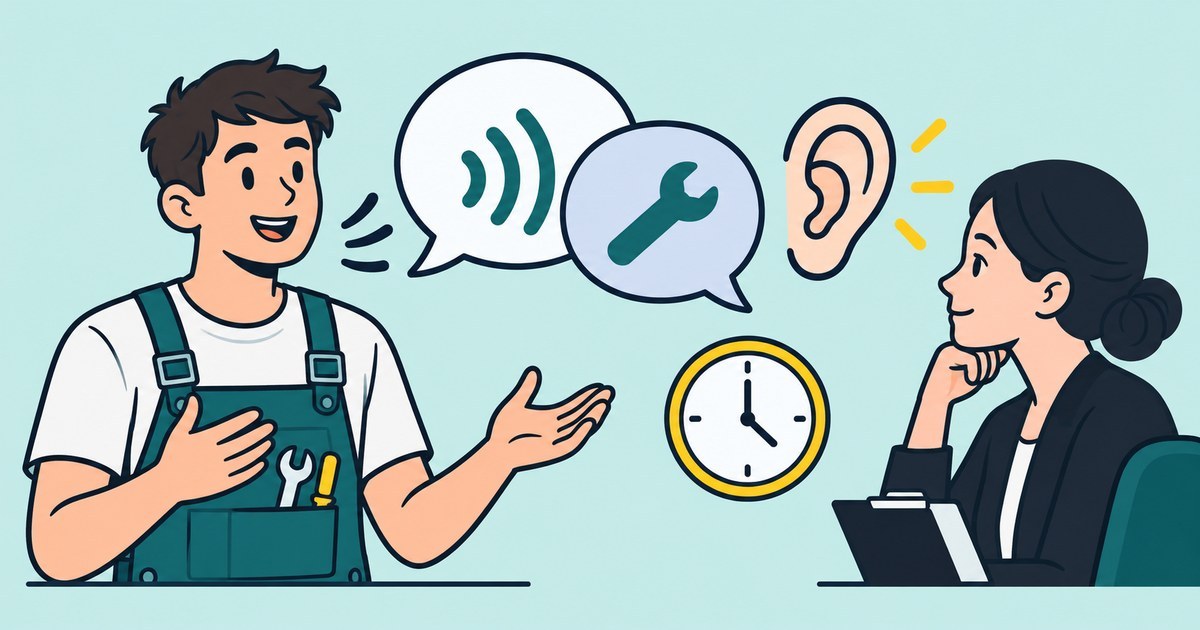
In a skills-assessment technical interview, the assessor is a qualified tradesperson in your own occupation, not a generalist: VETASSESS says its assessor has worked in Australia in that occupation for many years and is experienced in questioning candidates from all backgrounds. The interview is conducted in English, and no interpreter is allowed, so there is no one to translate an American word for you in the room.
You also do not get much spare time to stop and think. VETASSESS says its Pathway 1 technical interview takes about three hours, held either over the internet or face to face at an assessment venue. An assessor who knows the Australian word for a part or a tool, hearing only the American word back, may simply ask you to explain further, which uses up time you could spend on the next question.
Automotive and workshop words
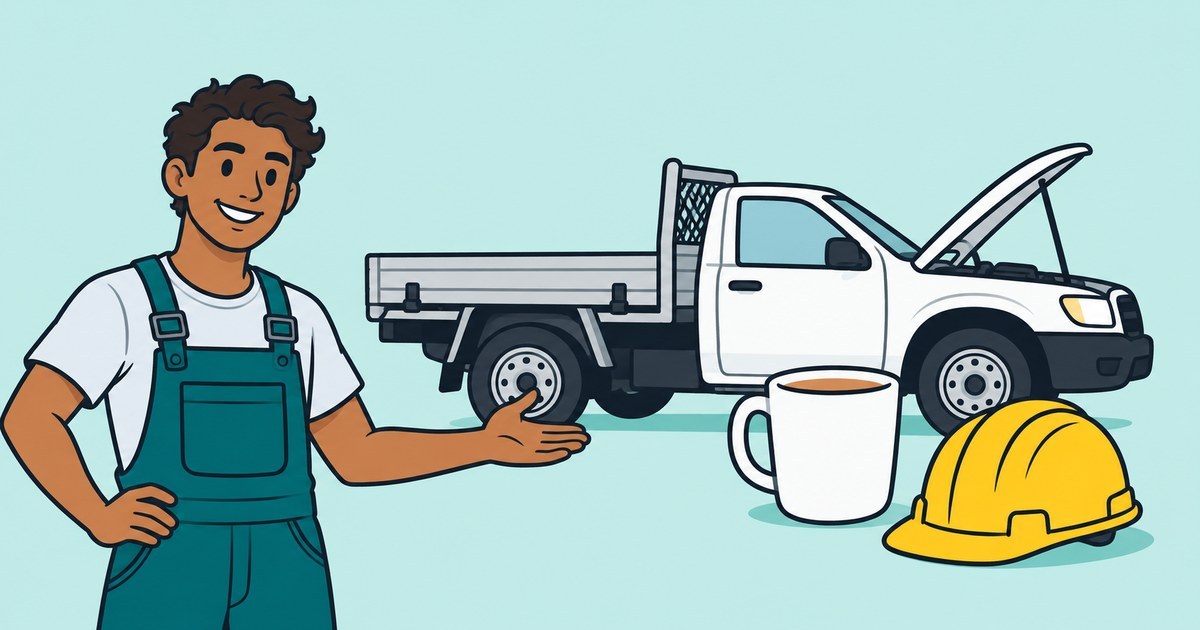
Mechanics, diesel mechanics, automotive electricians and panel beaters usually learn car parts from American manuals and videos first. On an Australian vehicle, the engine cover is the bonnet, not the hood; the rear storage area is the boot, not the trunk; and the front glass is the windscreen, not the windshield. Fuel is petrol, not gas, and a small truck with an open tray at the back is a ute, a word Australians use every day and one you will not hear in the United States. Our guide to Australian trade words that confuse new arrivals covers more everyday words like this one, and our trades page has interview questions for each trade.
Electrical site words
Electricians trained on American course material often know outlet, ground and breaker box. On an Australian site these become the power point, the earth, and the switchboard. A portable light is a torch, not a flashlight. These words appear in ordinary sentences about a job, so using the American word does not stop you being understood, but it does mark your English as American-trained rather than local.
Plumbing words
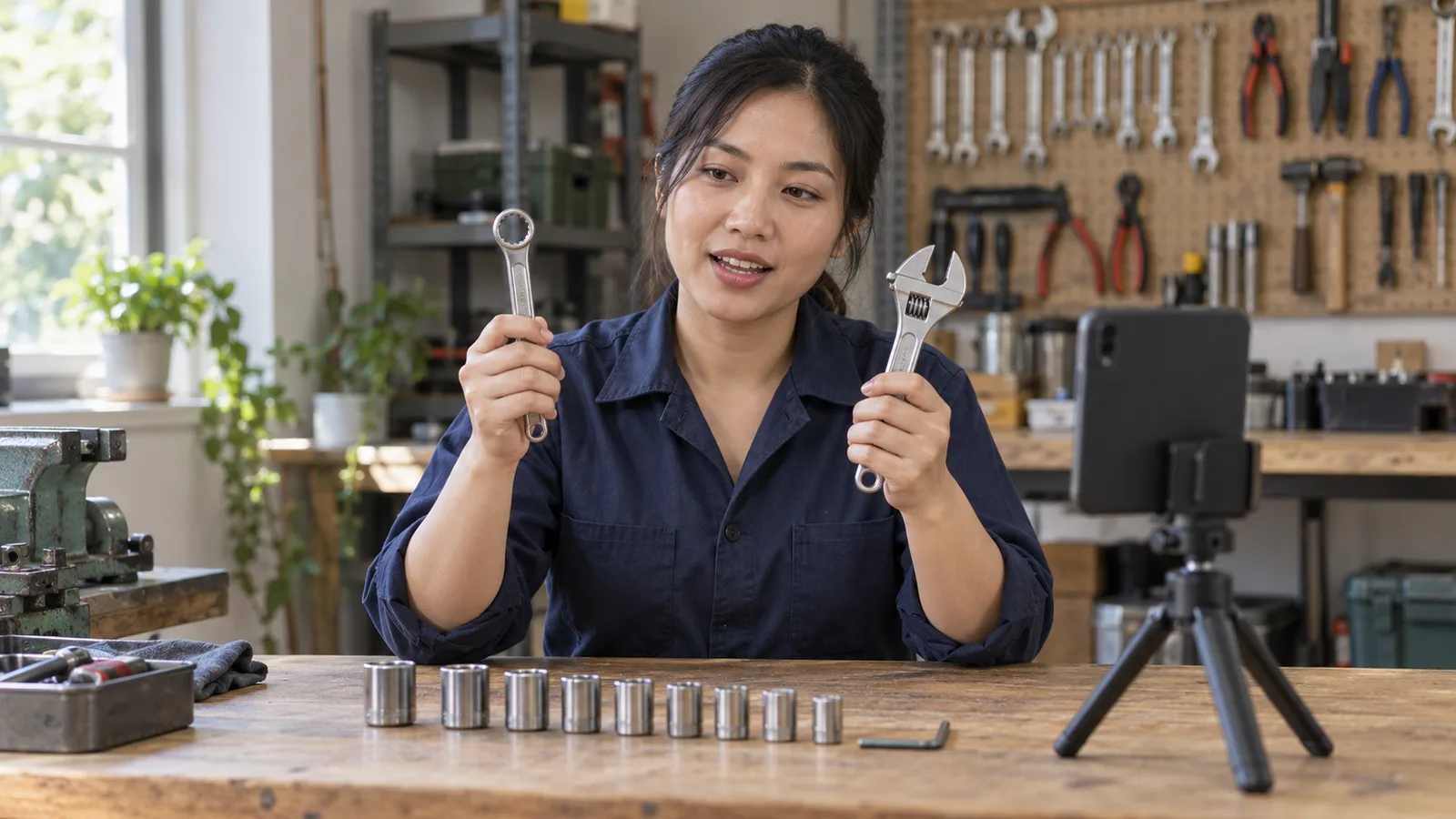
For plumbers, the tap replaces the faucet in everyday speech, and a drain cleared with a long flexible tool is usually described by what you did to the drain rather than by the American name for the tool. Pipe-turning tools keep some crossover: Australians still say pipe wrench for that specific tool, even though the general hand tool for nuts and bolts is a spanner, not a wrench. Our separate guide to spanner vs wrench goes through the tool names in detail.
Building and carpentry words
Carpenters and builders who trained on American sites will know lumber, drywall and crawl space. On an Australian site these are timber, plasterboard and subfloor space. A tape measure, a level and a hammer keep the same names in both countries, so it is worth learning which words change and which do not, rather than assuming every word is different.
Kitchen and hospitality words
Chefs and cooks moving from American kitchen English hit a different set of changes. A cookie is a biscuit, fries are chips, and what Americans call chips, the thin fried potato snack, are crisps in Australia. A broiler is a grill, and food ordered to go is a takeaway. These words matter in a kitchen interview because a question about your last role, such as whether you worked the grill section, uses the Australian word, not the American one.
Workplace words that are not American or British at all
Some words you will hear in an Australian workplace are not really about accents at all: they are official Australian terms with their own meaning, used by the Fair Work Ombudsman and Safe Work Australia. A roster is the timetable showing the days and times you are expected at work. Overtime is time worked outside your ordinary hours, and a penalty rate is a higher pay rate for evening, weekend or public holiday work. The Fair Work Ombudsman's glossary says a full-time employee in Australia works 38 hours a week on an ongoing basis. On the safety side, a toolbox talk is a short site meeting before work starts, a white card is the general construction induction card, and PPE, SWMS and SDS stand for personal protective equipment, Safe Work Method Statement and Safety Data Sheet. None of these are slang: they are words you may be asked about directly in an interview.
The word table: trade by trade
| Trade | American word | Australian word | What it means |
|---|---|---|---|
| Automotive | Hood | Bonnet | The panel over the engine |
| Automotive | Trunk | Boot | The rear storage compartment |
| Automotive | Windshield | Windscreen | The front glass |
| Automotive | Gas | Petrol | Vehicle fuel |
| Automotive | Pickup truck | Ute | A small truck with an open tray |
| Electrical | Outlet | Power point | Where you plug in a cord |
| Electrical | Breaker box | Switchboard | Where the circuit breakers are |
| Electrical | Ground | Earth | The safety connection to the ground |
| Electrical/general | Flashlight | Torch | A handheld portable light |
| Plumbing | Faucet | Tap | Where water comes out |
| Building | Lumber | Timber | Cut and prepared wood |
| Building | Drywall | Plasterboard | Sheet wall lining |
| Building | Crawl space | Subfloor space | The gap under a timber floor |
| Kitchen | Cookie | Biscuit | A small sweet baked snack |
| Kitchen | Fries | Chips | Fried potato strips |
| Kitchen | Chips | Crisps | Thin fried potato snack from a packet |
| Kitchen | Broiler | Grill | Top-down oven heat for browning food |
| General | Trash | Rubbish | Waste |
| General | Elevator | Lift | A machine that moves people between floors |
| General | Resume | CV | Your work history document |
How to swap your words before the interview
- Write down the American words you already use for tools, parts and site terms in your own trade.
- Match each one against the Australian word in the table above, or in our separate word guides for your trade.
- Say a full sentence about your own work using the Australian word, not just the single word on its own.
- Practise the sentence out loud, more than once, so the Australian word comes out automatically under pressure.
- Try a mock question in our picture quiz or skills practice session and notice which words you still reach for in American English.
Common mistakes
The most common mistake is not learning new words but mixing them: starting a sentence with the Australian word, then slipping back into the American one when you get to the detail. Practise full sentences, not single swapped words, so the habit sticks.
A second mistake is over-correcting into slang. Words like smoko, arvo and knock off are everyday Australian words for a break, the afternoon and finishing work, but a technical interview is not the place to use them; save them for understanding your new workplace, and answer questions in plain, clear English.
A third mistake is learning only tool and part names and skipping workplace words such as roster, toolbox talk and white card. These come up in general interview questions about availability, safety and your work history, not only in technical questions about your trade.
To hear how those workplace words are used on a real working day, read our first week at a new job tips, with sentences for the induction, the morning pre-start and reporting a hazard.
Rules and requirements can change. Check the official government website before you act.
Frequently asked questions
Will I be marked down for using an American word by mistake?
A single American word is unlikely to fail you on its own, but using the Australian words shows the interviewer you are already familiar with how an Australian workplace talks, which helps the whole interview feel natural.
Do I need to learn Australian slang like smoko or arvo for a technical interview?
It helps you understand your new workplace, but a technical interview is answered in plain, clear English, not slang: keep casual words for everyday conversation once you are on the job.
Is an Australian skills-assessment technical interview held only in English?
Yes. VETASSESS says the technical interview is conducted in English and no interpreter is allowed, so practising your trade vocabulary in English beforehand matters more than it would for a casual conversation.
What if I do not know the Australian word for something?
Describe what the part or tool does and what job it is used for. An assessor who is a qualified tradesperson in your occupation will usually recognise the item from a clear description, even without the exact local name.
Are Australian trade words the same as British English?
Mostly yes: Australian trade and tool words generally follow British English rather than American English. A small number of words, such as ute, are Australian terms in their own right, not British ones.
How is this different from watching Australian tradie videos?
Videos are useful for hearing pronunciation and tone, but they do not check your whole vocabulary at once. This guide groups the words by trade so you can see which ones you need to change, then practise full sentences in our picture quiz or skills practice session.
Key takeaways
- Australian trade and tool words mostly follow British English, not American English.
- The changes are biggest in automotive, electrical, plumbing, building and kitchen vocabulary.
- A skills-assessment technical interview is conducted in English with no interpreter, so the right word matters.
- Workplace words like roster, toolbox talk and white card are official Australian terms, not slang.
- Practise full sentences with the Australian word, not single swapped words, until they feel automatic.
Topics
- australian english
- american english
- trade vocabulary
- tool names
- interview english
- tradespeople