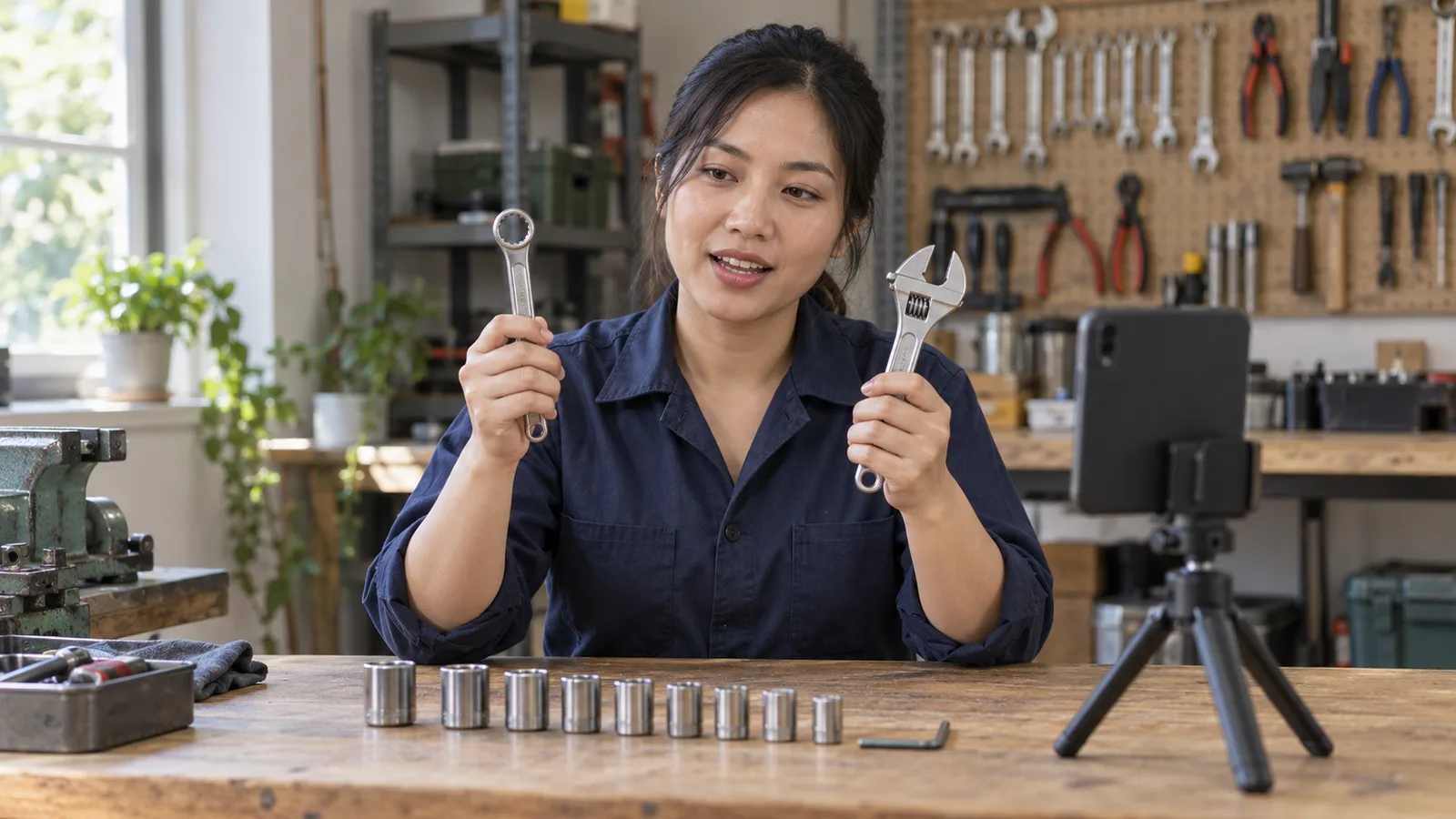
Picture your first morning in an Australian workshop. The supervisor says, "Open the bonnet, grab a spanner, and we will have a look after smoko." Every word is English. You may still not know what to do.
This is not a skills problem. It is a word problem, and it is easy to fix. Australian workplaces use many of the same vehicle and tool words as British English, plus some short, informal words of their own. If you learned English from American films or textbooks, some of them will be new to you.
Below is a list of common words with plain meanings. After it, you will find what to say when a word is new.
Why these words matter in an interview
An interviewer may use everyday Australian words inside a technical question. For example: "A customer says the bonnet will not close properly. What do you check?" If you do not know that the bonnet covers the engine, you cannot show what you know about the repair.
The employer is not testing slang. They want to know that you can follow an instruction on a busy site, and that you will ask when you are not sure. So there are two skills here:
- knowing the most common words
- asking a clear question when you meet a new one
You can practise both. Neither needs perfect English, as we explain in why imperfect English is OK in a trade interview.
Australian trade words and what they mean
Some of these words are standard English in Australia. Others are informal, and the table says so. The example sentences show how you may hear each word at work.
| Word | Meaning | Example sentence |
|---|---|---|
| bonnet | The metal cover over the engine of a car. Called a hood in some countries. | "Open the bonnet and check the oil level." |
| boot | The storage space at the back of a car. Called a trunk in some countries. | "The spare tyre is in the boot." |
| windscreen | The front glass of a vehicle. Called a windshield in some countries. | "The windscreen has a small crack." |
| guard | The body panel over a wheel. Called a fender in some countries. | "The left front guard has a dent." |
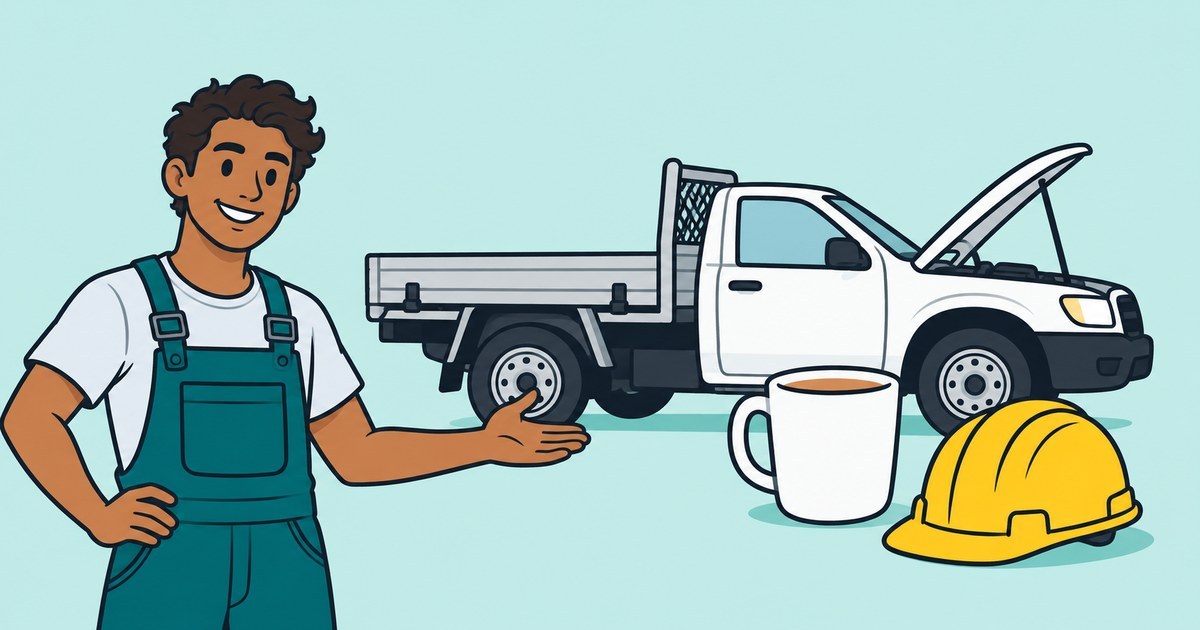
| ute | A vehicle with a cabin at the front and an open tray at the back for tools and loads. Short for utility vehicle. | "Put the ladder on the ute." |
| petrol | The fuel most cars use. Called gas or gasoline in some countries. | "Is this car petrol or diesel?" |
| servo | Informal. A service station, where you buy fuel. | "Fill up at the servo on the way." |
| rego | Informal. Vehicle registration. | "The rego on this car is due next month." |
| spanner | A hand tool for turning nuts and bolts. Called a wrench in some countries. | "Pass me the 13 millimetre spanner, please." |
| shifter | Informal. An adjustable spanner. | "Have you seen my shifter?" |
| torch | A small light you hold in your hand. Called a flashlight in some countries. | "Bring a torch so we can see under the seat." |
| hoist | A machine that lifts a vehicle so you can work under it. | "Put the car on the hoist." |
| tap | The fitting you turn to let water out. Called a faucet in some countries. | "The kitchen tap is dripping." |
| power point | A wall socket where you plug in a tool or a lead. | "Is there a power point near the bench?" |
| earth | The safety connection to the ground in an electrical system. Called ground in some countries. | "Check the earth connection first." |
| tradie | Informal. A tradesperson. | "There are six tradies on this job." |
| sparky | Informal. An electrician. | "The sparky will connect the power tomorrow." |
| chippy | Informal. A carpenter. | "Ask the chippy to fix the door frame." |
| smoko | Informal. A short rest break at work, often in the morning. You do not have to smoke. | "We stop for smoko at ten." |
| arvo | Informal. Afternoon. | "The parts will arrive this arvo." |
| knock off | Informal. To finish work for the day. | "We knock off at four today." |
| flat out | Informal. Very busy. | "We are flat out this week." |
| hi-vis | High-visibility clothing in bright colours, so drivers and machine operators can see you. | "You need hi-vis to enter the site." |
| PPE | Personal protective equipment, such as safety glasses, gloves, boots and ear protection. | "Put your PPE on before you start grinding." |
| toolbox talk | A short safety meeting for the work team, often before the job starts. | "We talked about ladders in the toolbox talk." |
| no worries | Informal. It can mean 'that is fine', 'yes, I can do that' or 'you are welcome'. | "Thanks for your help." "No worries." |
Vehicle words: the same part with a different name
Most confusion comes from parts that have two names in English. A hood and a bonnet are the same panel. So are a trunk and a boot, a fender and a guard, a windshield and a windscreen.
You do not need to forget the word you know. Learn the pair, so you recognise both.
Be careful with words that have two meanings at work:
- Guard can be a body panel on a car. It can also be the safety cover on a machine, such as a grinder.
- Boot can be part of a car. Boots are also the safety footwear you wear on site.
The job in front of you usually tells you which meaning is right. If it does not, ask.
Short words you will hear all day
Australians often make a word shorter and put an "o", "ie" or "y" sound on the end. Afternoon becomes arvo. Service station becomes servo. Registration becomes rego. Tradesperson becomes tradie.
Once you know this pattern, you can often guess a new word. Think about which longer word it could be.
Smoko surprises many people. It comes from an old word for a smoking break. Today it simply means a short break for a drink or something to eat.
These words are friendly, not rude. You may hear them from a supervisor as well as from workmates.
Safety words are not slang
Hi-vis, PPE and toolbox talk are standard words on Australian work sites. They can also come up in an interview, in a question such as "What PPE do you wear for this job?"
Treat these three differently from the informal words:
- Learn them exactly.
- Be ready to use them in your own answers.
- Never guess. If you do not understand a safety instruction, stop and ask before you start.
Asking is the safe choice. It is also what a careful worker does.
What to do when you hear a word you do not know
It will happen, in the interview and on the job. Use these four steps.
- Say it straight away. "Sorry, I do not know that word. What does 'shifter' mean?"
- Repeat the instruction in your own words. "So you want me to take the front guard off first. Is that right?"
- Write the word down. Keep a list on your phone with the meaning and one example sentence.
- Use the word yourself the same day. Saying it out loud helps you remember it.
In an interview, you can also say, "Could you say that another way, please?" This is polite and normal.
Should you use these words yourself?
Use the standard ones, such as bonnet, spanner, windscreen and PPE. They make your answers easier for an Australian interviewer to follow.
You do not need to use the informal ones. Saying "this afternoon" instead of "this arvo" is always correct. It is enough to understand them when you hear them.
Other ways to build your trade vocabulary
- Read job ads for your trade. The words in an ad are often the words used on the job. Recruitment sites for overseas jobs are one place to look.
- Watch repair or building videos made in Australia. Stop the video when you hear a new word and add it to your list.
- Keep your general English moving. If you are also studying for a test such as IELTS or PTE, English test practice builds your listening and speaking. Test English and workshop English are not the same, so work on both.
Practise the words before your interview
A word list helps, but you remember words better when you hear them and use them.
On InterviewTraining.ai, the Picture Quiz is built for this kind of listening. You hear a short audio question, look at a picture and choose one of three options. The questions cover tools, parts, jobs and safety words for your trade. Each one is marked right or wrong straight away.
The Living & Working Here section covers the everyday side of work. Its topics include greetings and small talk, workplace communication style, and humour and tone. Each topic gives you a short situation, three possible replies, and an explanation for the reply you pick.
When you sign up, you choose your trade, your destination country and your English level. If Australia is your destination, start with our Australia page.
Practice cannot promise you a job. It can make sure that "open the bonnet" is not a surprise on your first day.
Frequently asked questions
What is a ute in Australia?
A ute is a vehicle with a cabin at the front and an open tray at the back for tools and loads. The word is short for utility vehicle. Many tradespeople in Australia use one for work.
What does smoko mean on an Australian work site?
Smoko is an informal word for a short rest break at work, often in the morning. It comes from an old word for a smoking break, but today it means any short break for a drink or food.
Do I need to use Australian slang in my interview?
No. You only need to understand common words when you hear them. Use standard words such as bonnet, spanner and PPE in your answers. Saying 'this afternoon' instead of 'arvo' is always correct.
What should I do if the interviewer uses a word I do not know?
Ask straight away. You can say, 'Sorry, I do not know that word. Could you say it another way, please?' This is polite, and it shows you will ask on the job instead of guessing.
What is the difference between a bonnet and a hood?
They are the same part: the metal cover over the engine of a car. Australians say bonnet. In the same way, a boot is a trunk, a guard is a fender, and a windscreen is a windshield.
Topics
- Australian English
- Trade vocabulary
- Workplace English
- Australia