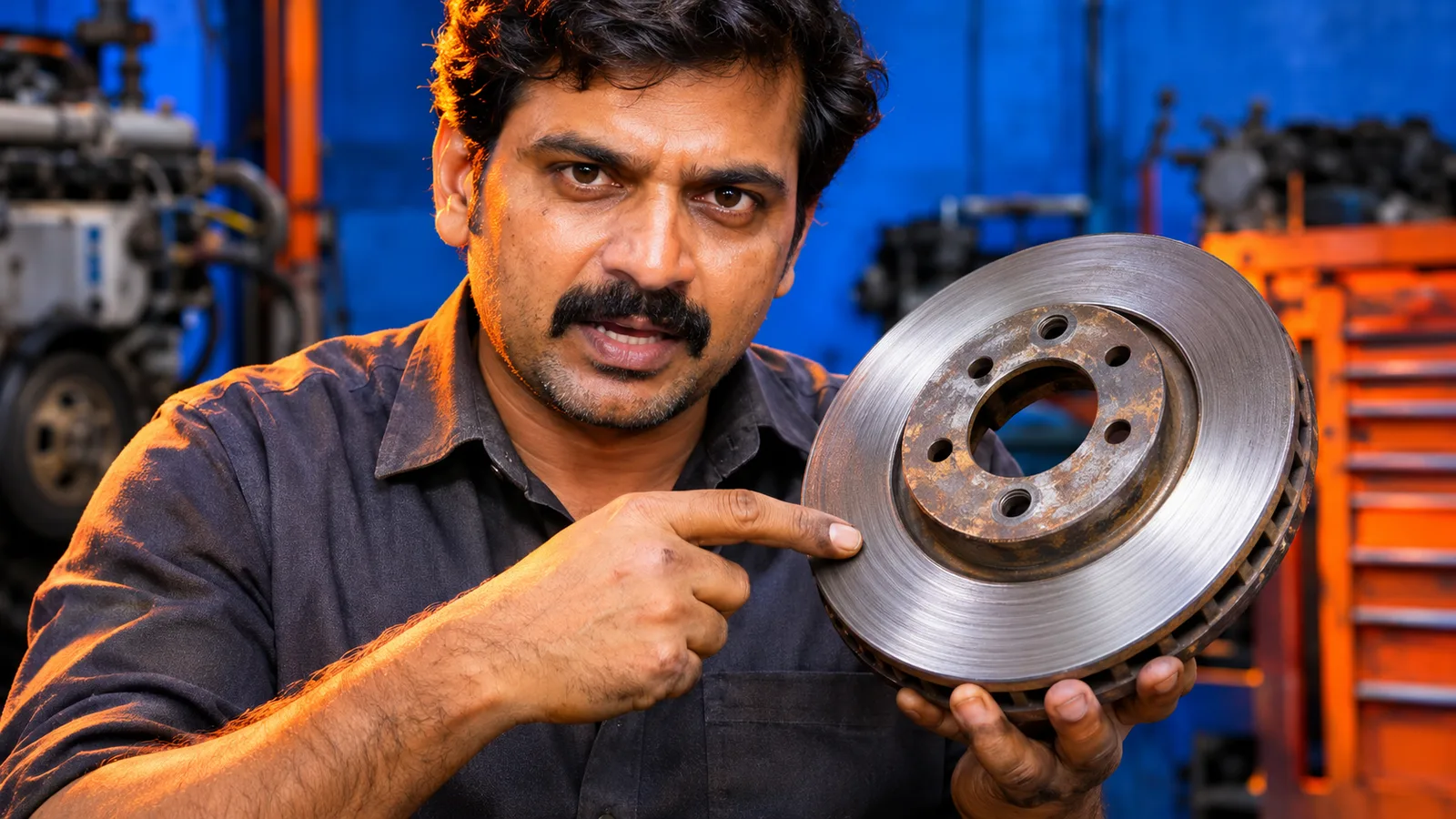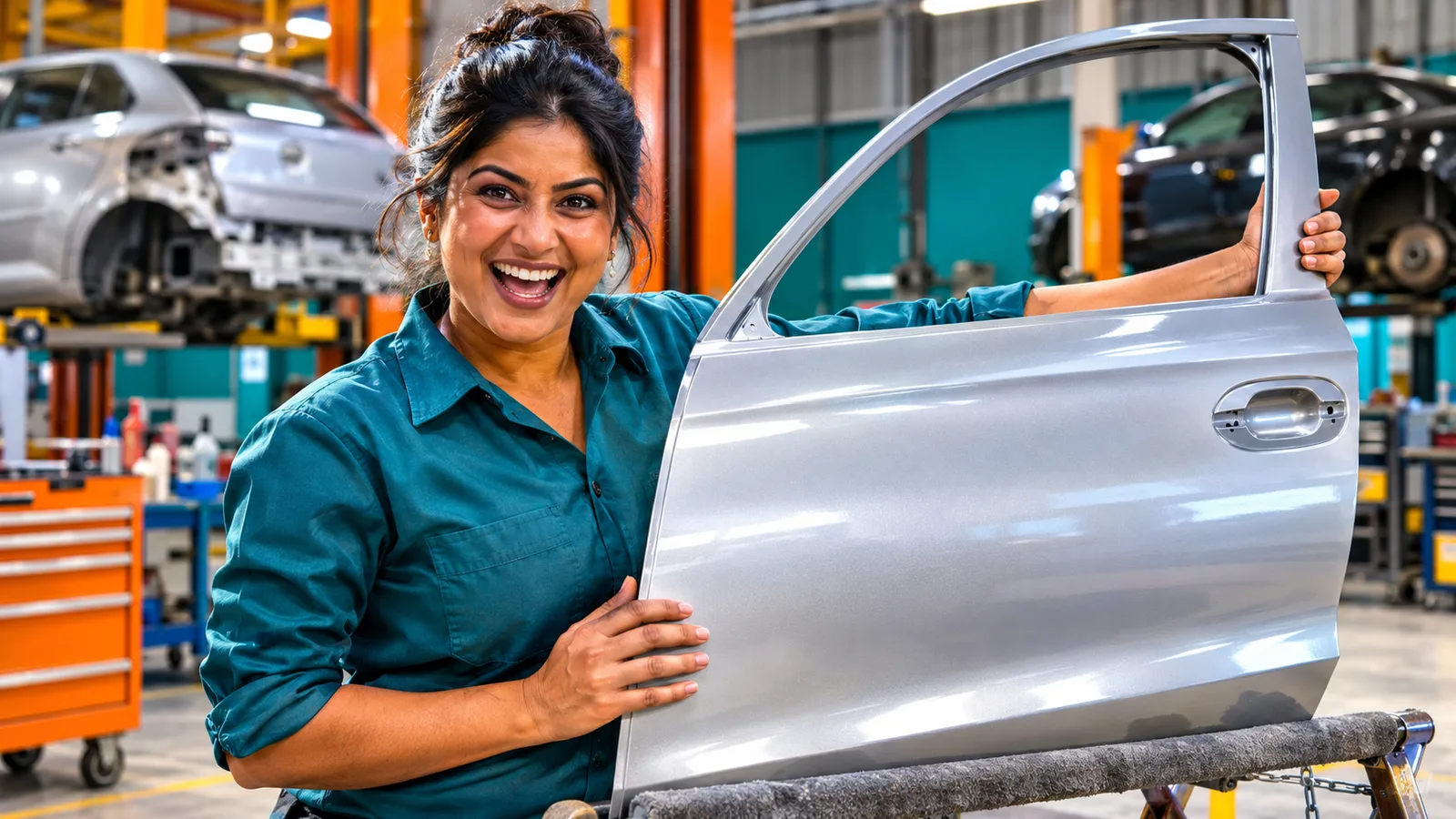
A smash repair job interview follows the shape of a repair job: look at the damage, plan the repair, do the work safely, and check the finish. A smash repair workshop wants to hear that order, in your own plain words, with one example from your own work. Below are eight questions to practise, a simple way to build each answer, and the safety and trade words that matter most.
What a smash repair workshop is listening for
A panel beater (the Australian word for a person who repairs damaged vehicle bodies) usually meets two kinds of interview. The first is a job interview with a workshop owner or shop foreman. The second, for some people moving to Australia, is a technical interview in a skills assessment.
Trades Recognition Australia (TRA) says the technical assessment is done by a qualified assessor who is also a qualified tradesperson in your occupation. Read our guide to the skills assessment technical interview for how that process works. TRA lists Panelbeater in its Offshore Skills Assessment Program, with nominated countries and Special Administrative Regions of China, Fiji, Hong Kong SAR, India, Macau SAR, Philippines, South Africa, Thailand, Vietnam and Zimbabwe. Check the official TRA list before you assume it applies to you.
A workshop owner asks simpler questions, but listens for the same three things. Can you do the work? Will you do it safely? Can you explain it so a workmate understands?
Eight panel beater interview questions to practise
These are examples of the kinds of questions a smash repair workshop may ask. They are not an official list. Use the third column as a starting point and change it so the facts are true for you.
| Question | What the workshop wants to hear | How a simple answer could start |
|---|---|---|
| How do you assess damage on a vehicle? | A careful order, not a quick guess | "First I look at the whole panel, then I check the edges and the parts behind it." |
| How would you repair a dented door? | Steps, tools and a check at the end | "I remove what is in the way, work the dent out slowly, then check the surface by hand and by eye." |
| When do you replace a panel instead of repairing it? | Good judgement about time and quality | "If the metal is too stretched or torn to finish well, I would talk to the supervisor about replacing it." |
| What tools do you use most? | The right word for each tool, and why you use it | "I use hammers and dollies for shaping, and a sander to prepare the surface." |
| How do you keep yourself safe in the workshop? | Habits, not just a list of equipment | "I wear the right protective equipment, I check the area first and I tell my supervisor about any hazard." |
| Tell me about a hard repair you did. | A true story with a clear result | "The hardest job was a badly creased guard. I planned the repair before I touched it." |
| What do you do if you find a mistake in your own work? | Honesty and a fix, not excuses | "I stop, tell my supervisor and correct it before the car goes on." |
| Why do you want to work here? | Real interest in this workshop and this work | "I want steady work in smash repair, and I like that your workshop does a wide range of repairs." |
Notice that none of the starting lines is long. Short, clear sentences are easier to say under pressure than a speech you have memorised word for word.
A simple way to build any panel beater answer
Most technical questions can be answered with the same four steps. This is plain coaching, not an official rule.
- Say what the job is: "I will explain how I repair a dented door panel."
- Say the steps in order, using "first", "then" and "after that".
- Say how you check the work and what you do if it is not right.
- Finish with the safety point that fits the job.
For a story question, such as the hard repair, use the same idea in a different order: the situation, your task, what you did, and the result. Choose a real job. If you do not remember exact details, say so and describe the kind of damage and the repair you chose.
Talking about safety in a smash repair workshop
Safety is part of nearly every panel beater answer, so practise it separately. Safe Work Australia's glossary defines a hazard as a situation or thing that has the potential to harm a person. It defines risk as the possibility that harm (death, injury or illness) might occur when someone is exposed to a hazard.
Safe Work Australia also says personal protective equipment (PPE) is anything a worker uses or wears to keep them healthy and safe, and workers must use it as instructed. You can read the official PPE page for the full explanation. Do not say PPE is your only protection. Say you also look for hazards first and tell your supervisor about problems.
Under the model work health and safety laws, workers must take reasonable care for their own health and safety and that of others. In some circumstances a worker also has a right to stop or refuse unsafe work if they have a reasonable concern of a serious risk. Our guide to workplace safety questions in an overseas trade interview has more sample answers.
The words to get right
Australian workshops use their own words for parts and tools, and a wrong word can make a good answer harder to follow. Learn the car part pairs in our post on bonnet vs hood and boot vs trunk, and the tool names in our guide to hand tools names in English.
When you do not know a word, say what the thing does: "the panel at the front that covers the engine". Then ask, "What do you call this here?" That shows good sense, and it is better than staying silent.
If the workshop offers a trial
Some workshops ask a candidate to work under supervision for a short time after the interview. The Fair Work Ombudsman describes an unpaid work trial as a demonstration by someone working under supervision to show they have the skills for the job. Its example of a lawful unpaid trial is a trades assistant applicant at a panel beaters who follows a tradesman doing body repairs while the tradesman checks he knows how to work safely and use the right tools.
The Ombudsman says any period beyond what is reasonably required to show the skills must be paid at the appropriate minimum rate of pay. It also says a trial should be made clear before you start. Read the Fair Work page on unpaid trials and ask about the length and pay before you agree.
Practise out loud before the interview
Reading answers is not the same as saying them. On Skills Practice you watch an interviewer ask a question on video, answer out loud and get a score from 0 to 10, with what you did well, what to add and a stronger answer. The marking does not take marks off for your accent, small grammar mistakes or simple words. The site is practice only and is not linked to any government, skills-assessment body or employer.
The panel beater page has practice for your trade. The Picture Quiz helps with trade words, tools and safety signs, and the Mock Interview runs a full interview from start to finish. Our automotive mechanic interview questions are another good set to practise because workshops overlap.
Follow this plan in the week before your interview:
- Write your answers to the eight questions as short notes, not full sentences.
- Say each answer out loud twice, slowly, and time it.
- Ask a friend or family member to ask the questions in a different order.
- Choose one true repair story and practise it until the steps come out in order.
- The day before, say your first sentence aloud and prepare two questions to ask the workshop.
Your CV also needs to show the same repair work in plain words, so it is worth building it with an online CV builder before the interview. If you want employers to see your skills in one place, a candidate profile on Talent Tabloid is another option.
Rules and requirements can change. Check the official government website before you act.
Common mistakes in a panel beater interview
- Naming tools but not steps. A list of tools does not show how you work. Give the order of the repair.
- Skipping safety. If safety only appears when asked, it sounds like an afterthought. Put it inside each answer.
- Using American car words. Say bonnet and boot first, then explain if needed.
- Saying you never make mistakes. Every workshop has rework. Show how you find it and fix it.
- Memorising a speech. If you forget one line you lose the rest. Remember the steps instead.
- Pretending to understand. If you do not understand a question, ask the interviewer to say it again.
Frequently asked questions
Do I need to know the Australian names for car parts?
It helps a lot, because the workshop will use them every day. Learn the common pairs such as bonnet and hood, and boot and trunk, and use the Australian word first. If you forget one, describe the part and ask what they call it.
What if I only know one kind of repair, such as pulling dents?
Say so honestly and then explain what you know well, step by step. A workshop can often train a new worker on its own paint or fitting methods. What it cannot teach quickly is honesty, care and safe habits, so show those in your answer.
Will I be asked to repair something in the interview?
Possibly. Some workshops ask for a short trial after the interview so a tradesperson can see how you work and whether you use the right tools safely. The Fair Work Ombudsman says an unpaid trial should be made clear before you start and should last only as long as is reasonably needed to show your skills.
Is a skills assessment interview different from a workshop interview?
Yes. In a skills assessment, the assessor is a qualified tradesperson who checks that you can do the full range of tasks expected in your occupation. A workshop interview is a hiring conversation. The same honest, step-by-step answers work in both, but the assessment is more technical.
How long should my answers be?
Aim for about a minute for most answers, and a little longer when you explain a repair step by step. Stop when you have covered the steps, the safety point and one example. If the interviewer wants more detail, they will ask.
Can practising out loud help if my English is not strong?
Yes, because the hard part is often saying trade ideas in English, not knowing them. Saying your answers aloud shows you which words you are missing before the real day. Practise the same answer a few times until the steps come out in order.
Key takeaways
- Answer in repair order: assess, plan, repair, check.
- Put a safety point inside every technical answer.
- Use Australian car and tool words, and describe a part when you forget its name.
- Ask about the length and pay of any trial before you agree.
- Practise out loud, not only on paper.
Topics
- smash repair job interview
- panel beater interview questions
- panel beater jobs australia
- trade interview questions
- skills assessment interview
- interview english for tradespeople
- panelbeater