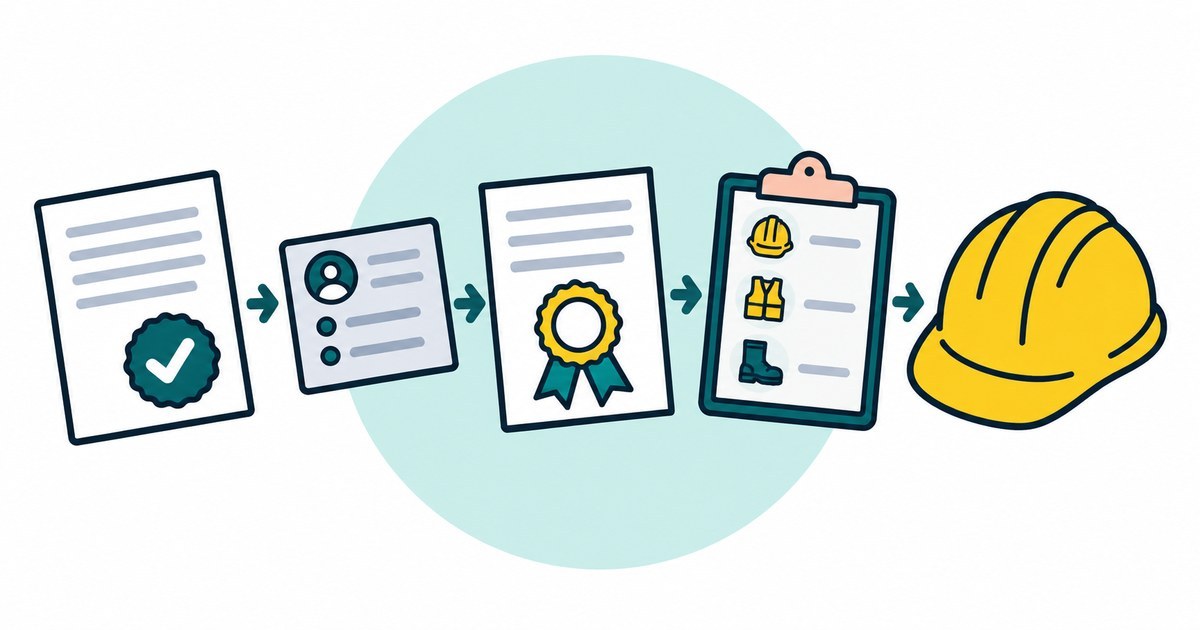
A good thank you message after an interview is short: thank the person by name, mention one thing you talked about, say you are still interested, and send it the same day or the next day. You can write it in two minutes, by email, text or a chat app. Below are three examples you can change to fit your own trade, and a clear list of times when it is better not to send one.
Why a thank you message helps
An interview is a short meeting between two people. After it, the employer may speak to several other workers and forget small details. A thank you message reminds them of your name and shows good manners. It does not replace a good interview, but it is a simple last step you control.
The official advice agrees. Tahatū, the New Zealand Government's careers website, advises sending an email to the interviewer the next day to thank them for their time. Canada's Job Bank suggests writing to thank the interviewers and say you are still interested, if possible on the same day. You can read both pages: Tahatū after the interview and Job Bank interview preparation.
What to put in a thank you message
Every good message has the same four parts. You do not need more.
- Thank them by name. Use the name the interviewer gave you. If you are not sure of the spelling, check the email they sent you.
- Mention one real detail. This could be the type of work, the team, or a question you asked. It shows you were listening.
- Say you are still interested. One simple sentence is enough.
- Close politely. Say you are happy to answer more questions, then add your name and phone number.
Use plain words. If English is your second language, a short message with simple words is better than a long message full of big words you copied from the internet. The employer is reading your message to see if you are polite and clear, not to check your grammar.
Three short thank you messages you can adapt
These are examples only. Change the names, the trade and the detail so they are true for you.
| Where you send it | Example message | Good to know |
|---|---|---|
| Hello Mr Collins, thank you for talking with me today about the diesel mechanic job. I liked hearing about how your team plans the daily service work. I am still very interested and I am happy to answer any other questions. Kind regards, Samir Khan | Add a clear subject line, such as "Thank you for the interview on Tuesday". | |
| Text message | Hello Sarah, this is Samir Khan. Thank you for the interview today. I enjoyed seeing the workshop and I am still interested in the job. Thank you again. | Use it only if the employer already texted you or gave you a mobile number. |
| Chat app (for example WhatsApp) | Hello Mr Collins, thank you for your time today. I am still interested in the welder position and I am ready to send any papers you need. Samir | Keep it to two or three lines. Do not send voice messages or stickers. |
Notice what the examples do not do. They do not ask "Did I get the job?" and they do not repeat the whole interview. They also do not promise anything or say what you want to be paid.
Which message should you choose
Choose the same way the employer first contacted you. If the invitation came by email, answer by email. If a recruiter or workshop owner talked to you on a chat app, a short chat message is fine. For a video interview from overseas, email is usually the safest choice, because it works in every time zone and the employer can read it when they are ready. Our guide to video interviews from overseas covers the camera and sound side of that day.
When to send it, and when to skip it
Send it soon. The same day or the next morning is the best time, because the interview is still fresh for both of you. If you forgot, a message after two or three days is better than nothing, but keep it just as short.
There are also times when it is better not to send one:
- The employer told you not to contact them before they call you.
- You have no email address or number for the interviewer, and you would have to guess it.
- You are only writing to ask for the result. That is a different message, and it should wait.
- You have already sent a few messages. Another one looks like pressure.
If you are not sure, think about the way the interview ended. If the employer said "we will call you on Friday", wait for Friday. At the end of an interview, it is also fine to ask when you are likely to hear back. The Australian Human Rights Commission's IncludeAbility guide says there is generally time at the end of an interview to ask exactly that.
What to do after you send it
Tahatū gives more steps for the day after an interview. It advises writing down the questions you were asked, letting your referees know they could be contacted, and asking for feedback if you did not get the job. These steps are useful in any country. Your notes about the questions become your practice list for the next interview, and your referees will not be surprised by a phone call.
Canada's Job Bank also suggests calling to ask about the status of the hiring process if you have not heard from the employer in about two weeks. Until then, keep applying for other jobs. If you want to show your skills and work history in one place for employers, a profile on Talent Tabloid is one way to do it.
While you wait, you can look for other openings on JobFinder. It is a place to look at jobs, and it does not promise you will get one.
Common mistakes
- Waiting a week. The longer you wait, the less the message helps. Send it within a day if you can.
- Copying a long letter from the internet. It sounds like a template and it does not sound like you.
- Writing to the wrong person. Check the name, the spelling and the email address before you press send.
- Asking about pay in the message. Pay talk belongs in the interview or the offer, not in a thank you note.
- Sending complaints or excuses. If a question went badly, add one correct sentence at most, then stop.
- Not practising for the interview itself. A thank you message cannot fix an interview where you froze. Practising out loud matters more.
Practise the interview, not only the message
The thank you message is only the last two minutes. Most of your chance is in the interview itself. On InterviewTraining.ai you watch an interviewer ask a question on video, answer out loud, and get a score from 0 to 10 with what you did well, what to add, and a stronger answer. It is practice only, and it works on a phone or a laptop.
Start with General Practice for the personal questions, then try a full Mock Interview. The how it works page shows each step. If nerves are the problem, read our plan to calm nerves before an interview and our list of questions to ask an employer. After a yes, see what employers check from job offer to first day.
Rules and requirements can change. Check the official government website before you act.
Frequently asked questions
Is a thank you message after an interview really needed?
No rule says you must send one, but it is a polite habit and it takes two minutes. Tahatū, the New Zealand Government careers site, and Canada's Job Bank both suggest thanking the interviewer. If you forget, a short message a day or two later is still fine.
Can I send a thank you message on WhatsApp after an interview?
Yes, if the employer first contacted you on WhatsApp or gave you that number for the interview. Keep it as short as a text and use their name. If they only gave an email address, send an email, because that is the way they chose to talk to you.
How long should a thank you message be?
Three to five short sentences is enough. Say thank you, name one thing you talked about, say you are still interested and stop. A long message can look like you are repeating the interview.
What if I made a mistake in the interview?
Do not write a long apology. If you gave a wrong answer, you can add one correct sentence, such as the right name of a tool or step. Keep the tone calm and keep the message short.
When should I ask the employer about the result?
Canada's Job Bank suggests calling to ask about the status of the hiring process if you have not heard from the employer in about two weeks. It is also a good idea to ask at the end of the interview when you are likely to hear back, so you know when to wait.
Key takeaways
- Send a short thank you message the same day or the next day, in the same way the employer contacted you.
- Thank the person by name, mention one real detail, say you are still interested and stop.
- Do not send one if the employer asked you not to contact them, or if you would have to guess the address.
- Write down the questions you were asked and tell your referees they may be called.
- If you have heard nothing in about two weeks, a polite call about the status is reasonable.
Topics
- thank you message after interview
- thank you email after interview
- interview follow up
- whatsapp thank you note
- trade job interview
- after the interview
- interview tips for tradespeople