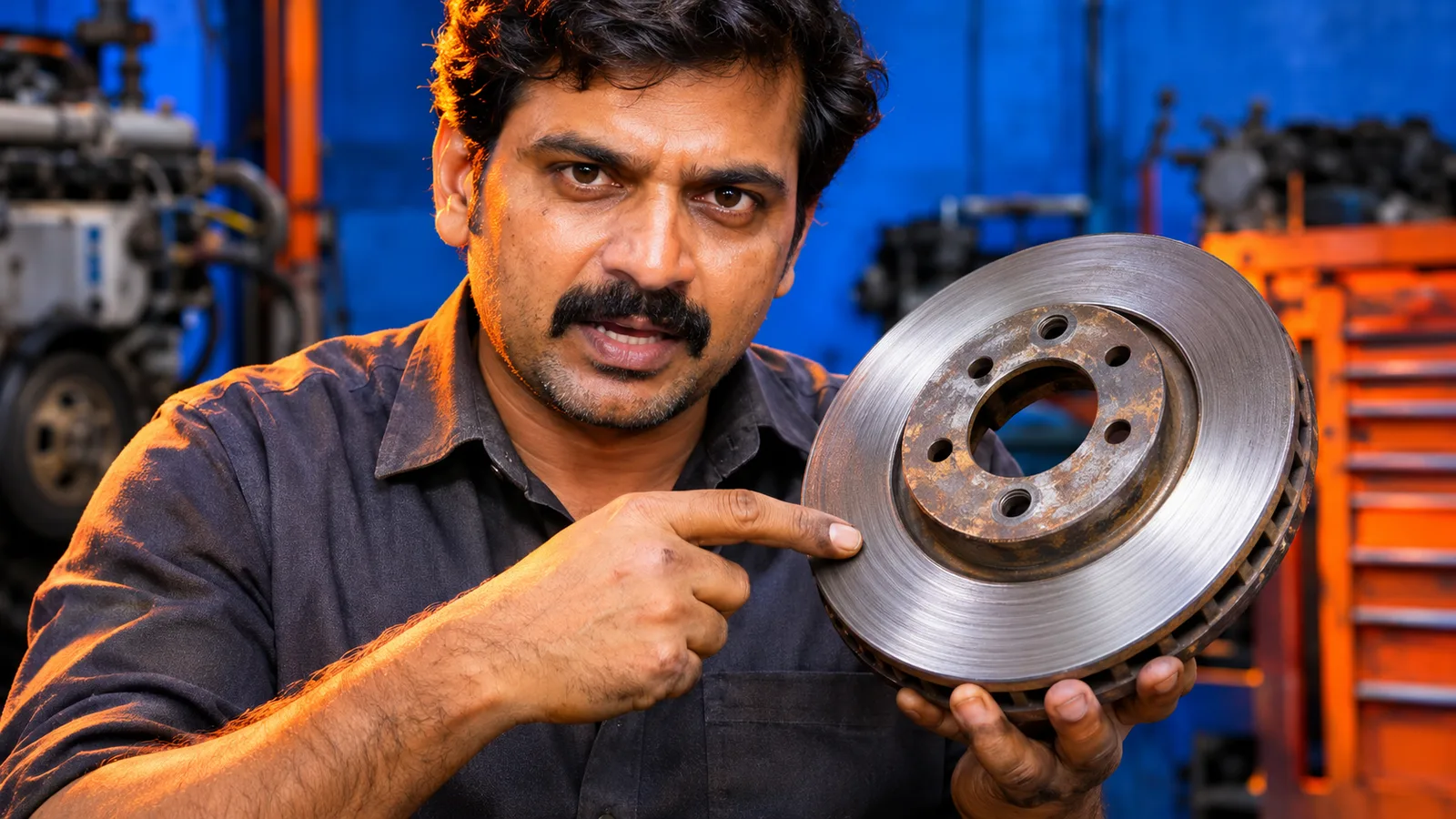
Diesel mechanic interview questions and answers come back to three things: how you find a fault, how you service a truck or machine, and how you keep yourself safe around heavy, hot and high-pressure equipment. The interviewer wants to hear a calm order of checks, the right Australian words and your own hands in every example. Below are the questions you are most likely to hear, short sample answers you can change to fit your own work, and a word list for the terms that confuse people new to Australian workshops.
Two kinds of diesel mechanic interview
You will meet these questions in two places: a job interview with a workshop manager, often by video, and the technical interview in a skills assessment.
Diesel Motor Mechanic is in Trades Recognition Australia's (TRA) Offshore Skills Assessment Program. For this trade, TRA lists Fiji, Hong Kong SAR, India, Macau SAR, the Philippines, South Africa, Thailand, Vietnam and Zimbabwe as nominated countries and SARs (see TRA's current list).
TRA says the assessor is also a qualified tradesperson in your occupation, so the person asking knows diesel engines. In Pathway 1 there is a technical interview and there may be a practical demonstration. You answer in English, without help.
We coach interviews, not visas. Our guide to the skills assessment technical interview explains how assessors ask questions. If you already work in Australia, RPLDirect explains recognition of prior learning for the Certificate III in Automotive Diesel Engine Technology.
The words Australian diesel workshops use
A truck dealer may say "diesel mechanic". A mine or a plant hire company may say "diesel fitter" or "heavy diesel mechanic". Match the words in the job ad. Our diesel mechanic trade page lists the questions you can practise.
| Word you will hear | What it means | A sentence you can use |
|---|---|---|
| Plant | Machinery and equipment, such as excavators, loaders and generators | "I have serviced mobile plant as well as trucks." |
| Prime mover | The front truck unit that pulls a trailer | "Most of my work was on prime movers for a freight company." |
| Service truck | A truck fitted with tools and parts, used to fix machines where they work | "I drove the service truck to sites and worked on my own." |
| Pre-start check | The short check a driver or operator does before using a vehicle or machine | "I read the operator's pre-start sheet before I start the job." |
| Isolate, tag out | Make the machine safe to work on and put a tag on it so nobody starts it | "I isolate the battery and put my own danger tag on the key switch." |
| Job card | The paper or screen record of the job, the parts and the time | "I write the fault, the cause and the fix on the job card." |
"The engine cranks but will not start. What do you check?"
This is the favourite question for diesel mechanics. The interviewer listens for your order: safety first, simple things next, tests before parts. Jumping straight to "change the injectors" sounds expensive. Say each step in one short sentence.
- Make it safe. Park brake on, wheels chocked, transmission in neutral, and nobody near moving parts.
- Ask and look. Ask the driver what happened before it stopped. Check the dash for warning lights.
- Check the fuel supply. Is there fuel in the tank, and is it the right fuel? Is the fuel shut-off working?
- Look for air or water in the fuel. Check the water separator and the filters. If the filters were just changed, the system may need priming.
- Check the cranking speed. A diesel needs heat from compression. Slow cranking from weak batteries or poor connections can stop it firing.
- Check cold-start aids. On a cold morning, test the glow plugs or the intake heater.
- Read the data. On an electronic engine, connect the scan tool. Read the fault codes and watch live data, such as fuel rail pressure, while cranking.
- Only then go deeper. Test the injectors, the pump or the compression, following the maker's service information.
A simple answer could be: "First I make the truck safe and ask the driver what happened. Then I check the easy things: fuel level, the right fuel, and the shut-off. Next I drain the water separator and look for air in the lines, and I prime the system if the filters were just done. I check the batteries and cranking speed. Then I plug in the scan tool and watch rail pressure while cranking. I only test the injectors or the pump after that."
Then add one true example: "A loader would not start on a cold morning. The scan tool showed no fault, so I tested the glow plugs and found two had failed."
The same shape works for any "what would you do if" interview question.
Servicing questions
These questions check that you are careful and write things down. Never guess a number; say where you would find it.
"Talk me through a service on a truck."
A simple answer could be: "I start with the job card and the service schedule from the maker. I drain the oil and change the oil filter and the fuel filters, then drain the water separator. I check the air filter and the restriction indicator. I check the coolant, the belts and the hoses, grease the chassis and look for leaks. Before I hand it back, I run the engine, check for leaks again and write everything on the job card."
"Where do you find the oil grade and the torque settings?"
A simple answer could be: "From the maker's service manual or the workshop software. If I cannot find it, I ask my leading hand." Note that in Australia a torque wrench keeps the name "wrench", while most turning tools are "spanners" (see spanner vs wrench).
Workshop safety questions
For the related Motor Mechanic (General) trade, VETASSESS's technical interview areas start with work health and safety (WHS): manual handling, spotting hazards and the right personal protective equipment (PPE). VETASSESS says its list is not complete, so read every unit of your own qualification.
Expect "How do you make a machine safe before you work on it?" A simple answer could be: "I shut the engine down, take the key and isolate the battery. I put my own danger tag on the isolation point and chock the wheels. Anything raised goes on stands or mechanical locks, never only on a jack. Then I try to start it, to prove it is dead."
On high-pressure fuel, say you let the system depressurise as the maker says, and never feel for a leak with your hand, because the fuel can go through skin.
Show you know the order of controls. Safe Work Australia says administrative controls and PPE are the least effective because they rely on people's behaviour (see its page on managing risks). So isolating the danger comes before gloves and glasses.
You may hear "What if your supervisor told you to skip the isolation?" In Australia workers must take reasonable care for their own safety and for others. Safe Work Australia also says that, in some circumstances, a worker may stop or refuse unsafe work when there is a reasonable concern of a serious risk. A simple answer could be: "I would explain that I cannot work on it until it is isolated, and ask how we can do it safely and quickly." More in our workplace safety interview questions.
Questions about you, your licence and a trial
Road testing trucks is part of many diesel jobs, so you may hear "Do you hold a heavy vehicle licence?" Say what you hold today. Do not promise a licence you do not have.
Rules differ by state. In Queensland, a driver from a recognised country who transfers an overseas heavy vehicle licence must pass a road rules test and a practical driving test, and India, the Philippines, South Africa, Vietnam and Sri Lanka are not on the recognised list (see Queensland's overseas licence page).
Some workshops ask for a short trial after the interview. The Fair Work Ombudsman says that if a trial is unpaid, this should be made clear before you start, and any time beyond what is needed to show your skills must be paid.
Before the interview, check that your CV names the engines, machines and fleets you have worked on, because interviewers ask about them. You can put your trade CV in order with Build AI CV. If you are still looking for an employer that sponsors diesel mechanics, you can search for sponsored roles on Employer Sponsored Jobs.
Common mistakes in diesel mechanic interviews
- Jumping to expensive parts. Saying "change the pump" before checking fuel, air and batteries sounds like guessing.
- Leaving out safety. If you describe a job without isolation or stands, the interviewer notices.
- Quoting numbers from memory. Say "I check the specification in the service manual" instead of guessing a torque or a pressure.
- Saying "we" all the time. The interviewer is hiring you. Say what your own hands did.
- Using only words from home. Learn the Australian words in the table, so "plant" or "prime mover" does not surprise you.
- Pretending to understand. VETASSESS tells candidates to ask the assessor to repeat a question they do not understand. Employers expect the same.
Practise the fault-finding answer out loud
Reading the steps is not enough. Say the no-start answer out loud, in English, in order, until it flows.
On InterviewTraining.ai you watch an interviewer ask a question on video, answer out loud and get a score from 0 to 10, with what you did well, what to add and a stronger answer. The marking does not take marks off for your accent or simple words. Start with technical questions in Skills Practice, learn tool and part names in the Picture Quiz, then put it all together in a full mock interview.
Rules and requirements can change. Check the official government website before you act.
Frequently asked questions
What questions are asked in a diesel mechanic interview?
Expect a fault-finding question (often an engine that cranks but will not start), a question about how you service a truck or a machine, questions about isolation and other workshop safety, and the usual questions about you, your licence and why you want the job.
How long should my answer to a fault-finding question be?
Long enough to give your checks in order, and no longer. Name the safety step, the simple checks, the tests and the tool you would use, then stop. The interviewer will ask for more detail if they want it.
Is the skills assessment interview for a diesel mechanic done in English?
Yes. Trades Recognition Australia says an IELTS test is not needed for its Offshore Skills Assessment Program, but you must do the technical assessment in English without help. It may also include a practical demonstration.
What if I have only worked on one brand of engine?
Say so honestly, then show that your method travels. Explain how you would use the maker's service information and a scan tool on a new engine, and give one example of a fault you found by testing rather than guessing.
Should I say "diesel fitter" or "diesel mechanic" in an Australian interview?
Use the words in the job ad. Workshops, mines and plant hire companies often use "diesel fitter" or "heavy diesel mechanic" for the same kind of work, so read the ad and match its words when you describe your experience.
Key takeaways
- Answer a fault question in order: safety, simple checks, tests, then parts.
- Name where you find specifications instead of guessing numbers.
- Put isolation and stands in every job you describe.
- Use the job ad's words: diesel mechanic, diesel fitter or heavy diesel mechanic.
- Practise each answer out loud until it sounds calm and short.
Topics
- diesel mechanic interview
- diesel fitter
- heavy diesel
- trade interview
- interview answers
- fault finding