Fitter interview questions and answers nearly always cover the same ground: the machines you have worked on, how you find and fix a fault, how you fit bearings and align shafts, and how you use measuring tools safely. The best answers are short, in the order you did the job, and about real work. This guide gives you the questions, what the interviewer wants to hear and simple sample answers you can change to fit your own experience.
What a fitter interview is really checking
A workshop manager wants to know three things. Can you do the work properly? Will you work safely around machines? Can you explain a problem to a workmate or a supervisor?
A skills assessment interview is a little different. For Fitter (General), Fitter and Turner and Fitter-Welder, VETASSESS lists technical interview areas such as drawings and marking out, computing engineering measurements, selecting tools like milling cutters and grinding tools, fault diagnosis, installing and removing bearings, and welding techniques such as MMAW, GMAW, TIG and FCAW. It also says its list is not complete, so read each unit in your qualification (in its technical assessment guide). Our guide to the skills assessment technical interview explains what that day can look like.
Fitter interview questions, what they want and a simple answer
| Question | What the interviewer wants | A simple answer could be |
|---|---|---|
| What machines have you worked on? | Real experience, named clearly | "I maintained pumps, gearboxes and conveyors in a packing plant. I also fitted and aligned electric motors." |
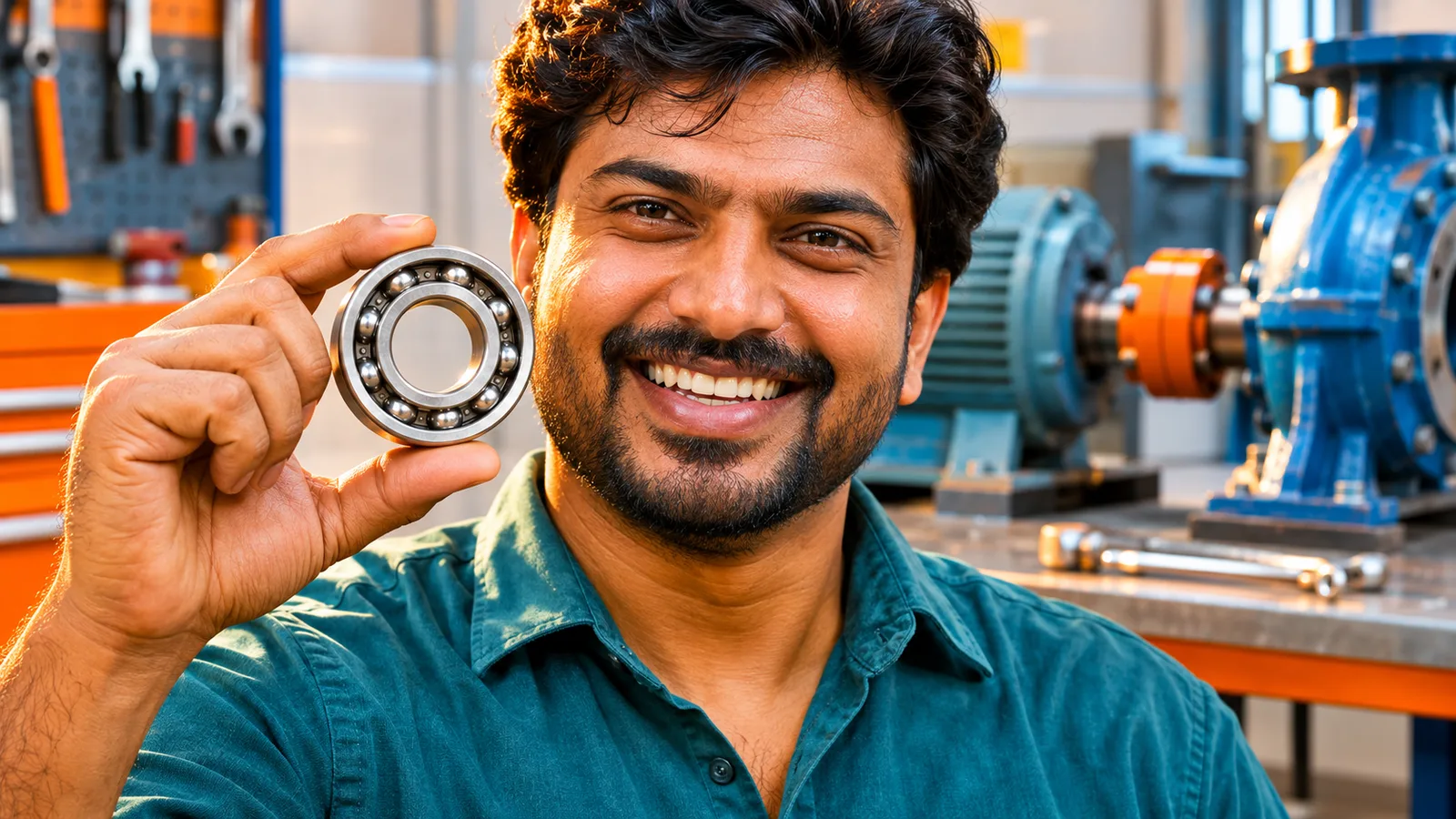
| How do you change a bearing? | A safe order and care with the shaft | "I isolate the machine first. I remove the old bearing with the right puller, clean the seat, check the shaft, then fit the new one evenly and test it." |
| How do you check alignment? | That you measure, not guess | "I check the base is clean and flat, then measure the two shafts and adjust the motor until they line up. I tighten, measure again and run it." |
| Which measuring tools do you use? | The right tool for the size of the job | "A steel rule and tape for long marks, a vernier or micrometer for fine sizes, and a dial gauge for run-out and alignment." |
| Tell me about a breakdown you fixed. | Fault finding and calm thinking | "A pump was noisy and hot. I stopped it, checked the bearing and found it dry. I replaced it, checked the alignment and watched it run." |
| What do you do before you open a machine? | Safety habits | "I tell the operator, switch it off and lock it out. I try to start it to check it is dead, then I begin." |
These are examples only. Change the machines, parts and steps so they match your real work. If you are not sure of a word, check it in our list of hand tool names in English.
How to talk about bearings, alignment and pumps
Many fitters know the job well but go quiet when they must say it in English. Use the job order. Start with the problem, then the check, then the repair, then the test.
Bearings
Say what you look for: noise, heat, play in the shaft or leaking grease. Then say how you remove it, how you clean the seat and how you fit the new bearing without hitting it unevenly. Finish with the test run. VETASSESS names installation and removal of bearings as a technical interview area, so expect this one.
Alignment
Alignment answers are strong when you say you measure twice. Mention the tool you use, what you adjust and how you check after tightening. Do not give numbers you are unsure of. It is better to say "I follow the maker's limits" than to guess.
Pumps and gearboxes
Describe the symptom first: leak, vibration, noise or heat. Then say the likely causes you check in order, such as the seal, the bearing, the coupling and the alignment. Interviewers like a clear method more than a long list of parts.
Measuring tools and drawings
Expect a question about marking out or reading a drawing. VETASSESS lists completing drawings and marking out exercises, and computing engineering measurements. Say how you read the drawing, which sizes matter most, and how you check your work before you cut or machine anything.
A simple answer could be: "I read the whole drawing first. I find the main sizes and the finish. I mark out, check my marks against the drawing, then cut a little oversize and finish to size."
If the interview is in the workshop, you may be asked to name tools or parts on the bench. Our Picture Quiz practice is for tool and part words like these, and our guide to spanner vs wrench covers the words that change between Australian and American English.
Safety questions for fitters
Fitters work with moving parts, heavy lifts, hot work and stored energy, so safety questions are common. Safe Work Australia's order of control measures starts with removing the hazard, then using something safer, isolating the hazard or using engineering controls, then administrative controls and last personal protective equipment (PPE). It says PPE is the lowest order control because it does not change the hazard itself.
In your own words: "Gloves and glasses help, but I do not rely on them. First I isolate the machine and make sure it cannot start."
Also be ready for "What would you do if you felt a job was unsafe?" Safe Work Australia says a worker may have a right to stop or refuse unsafe work if they have a reasonable concern of a serious risk, and must tell the person in charge as soon as they can. See our guide to workplace safety interview questions for more sample answers.
A 5-step answer for "Tell me about a breakdown you fixed"
The Australian Government's interview advice describes the STAR method (Situation, Task, Action, Result) for questions about the past. For a fitter, this becomes five short steps:
- Say the machine and the problem in one sentence.
- Say what you checked first and why.
- Say what you found.
- Say what you did to fix it, step by step, and how you stayed safe.
- Say how you tested it and what happened after.
If your mind goes blank, use the pattern in our "walk me through" answer guide. Pick one real example and practise it until you can say it in about a minute.
Common mistakes in a fitter interview
- Saying "we" for everything, so the interviewer cannot tell which part you did.
- Giving a size or a limit you are unsure of. Say how you would check the maker's limit instead.
- Skipping the safety step, such as isolation, when you describe a repair.
- Using long, difficult sentences. Short sentences sound confident and are easier to understand.
- Blaming a past employer or workmate when you explain a breakdown.
- Not checking if the job is mainly maintenance, machining or welding, and then answering about the wrong one. A fitter-welder interview may include welding, and our welder interview guide covers it.
Practise out loud before the interview
Reading answers is not the same as saying them. The Australian Government's advice says it can help to practise answers with someone you trust. VETASSESS also suggests practising the question "Tell me the tasks you do at work. Now tell me how you do each of them, what steps do you take, why do you do it that way?" before the technical interview.
On InterviewTraining.ai you watch an interviewer ask a question on video, answer out loud and get a score from 0 to 10 with what you did well, what to add and a stronger answer. The Skills Practice section has technical trade questions, and you can see the trade pages to find your trade. The answer timer depends on the English level you choose: 90 seconds on Foundation, 75 on Working and 60 on Fluent. A full mock interview is a good last step.
If you want a short way to show your work before the interview, the SelfIntroVideo website explains how a short self-introduction video works, and Build AI CV can help you get your resume ready.
Rules and requirements can change. Check the official government website before you act.
Frequently asked questions
What questions are asked in a fitter interview?
Most fitter interviews cover the machines you have worked on, how you find and fix a fault, how you fit and remove bearings, how you use measuring tools, and how you stay safe around moving parts. Some employers also ask you to read a drawing or mark out a job. Prepare one real example for each area.
How do I answer a fitter interview question if my English is not strong?
Use short sentences and the order of the job: what the fault was, what you checked, what you did and how you tested it. Slow, clear English is better than long, difficult words. If you do not know a word, describe the part in simple words, or point to the tool or part if you are in the workshop.
Is a fitter and turner interview different from a fitter interview?
The skills overlap, but a fitter and turner is also asked about lathe and milling work, tools and cutting. The VETASSESS technical interview areas list both jobs together. Read your own qualification units and prepare for the machines and tasks you really did.
Should I bring anything to a fitter interview?
Bring extra copies of your resume and, if it is relevant, examples of your work such as photos, drawings or a logbook. Bring a notebook and pen too. Only show work you did yourself, and remove any private details of past employers if they are not needed.
How can I practise fitter interview answers out loud?
Say each answer to a friend or record yourself, then listen for long sentences and missing steps. You can also use the Skills Practice section on InterviewTraining.ai, where an interviewer asks a question on video and you answer out loud. Practise until the answer feels like a normal conversation.
Key takeaways
- Prepare one real example each for bearings, alignment, a breakdown, measuring and safety.
- Answer in job order: problem, check, repair, test.
- Always include the safety step, especially isolation, before you describe a repair.
- Do not guess sizes or limits; say how you would check them.
- Practise out loud until the answers sound like normal conversation.
Topics
- fitter interview questions
- fitter and turner interview
- maintenance fitter
- mechanical fitter
- bearings alignment
- trade interview australia
- skills assessment interview
- interview english